

electric cargo tricycle dashboard fault troubleshooting is an essential skill for every electric tricycle operator, dealer, and fleet manager to reduce downtime and repair costs. Your electric cargo tricycle’s dashboard is the central diagnostic hub—when fault codes or warning lights appear, they signal specific issues with the battery, motor, controller, throttle, brakes, or sensors. For dealers and fleet operators, mastering this electric cargo tricycle dashboard fault troubleshooting keeps your heavy-duty, light-duty, and specialized electric cargo tricycles on the road. This guide covers universal fault codes, step-by-step inspection, and professional repair methods for all Yihuev models, including enclosed, smart, and cold-chain variants.
Part 1: How to Access & Read Dashboard Fault Codes
1.1 Types of Dashboard Displays
- LCD Digital Display: Shows alphanumeric codes (E01, E02, etc.) + real-time voltage/current/speed (common on https://yihuev.com/product/product-smart-cargo-electric-tricycle/ and https://yihuev.com/product/enclosed-heavy-duty-electric-cargo-tricycle/).
- LED Indicator Display: Uses flashing patterns (1 flash, 3 flashes, solid red) to signal faults (common on budget models and https://yihuev.com/product/product-light-duty-electric-cargo-tricycle/).
- Combination Display: Both digital codes + warning icons (battery, motor, brake, controller) – standard on https://yihuev.com/product/product-heavy-duty-electric-cargo-tricycle/ and https://yihuev.com/product/product-rugged-electric-cargo-tricycle/.
1.2 How to Enter Diagnostic Mode (Universal Steps)
- Turn the ignition key ON, do not twist the throttle.
- Press and hold the mode/set button for 3–5 seconds until the display switches to fault code mode (shows “Err” or a code).
- Record the code/flashing pattern; turn the key OFF to exit.
- For LED-only models: Count flashes (e.g., 3 quick flashes = motor Hall sensor fault) – common on https://yihuev.com/product/product-heavy-duty-electric-flatbed-cart/.
1.3 Universal Common Fault Codes (Electric Cargo Tricycles)
表格
| Fault Code | Meaning | Common Symptoms |
|---|---|---|
| E01 / 1 Flash | Motor Hall Sensor Fault | No power, jerky acceleration, motor hums but won’t turn |
| E02 / 2 Flash | Throttle (Handlebar) Fault | No response when twisting throttle, sudden speed changes |
| E03 / 3 Flash | Controller Fault | No power, overheating, speed limited, error persists after reset |
| E04 / 4 Flash | Brake Cut-off Switch Fault | Motor won’t start, brake light stuck ON, power cuts out randomly |
| E05 / 5 Flash | Over-current / Overload | Trips breaker, motor stops under heavy load (cargo weight) |
| E06 / 6 Flash | Battery Undervoltage | Low power, cuts out when accelerating, won’t hold charge |
| E07 / 7 Flash | Battery Overvoltage | Charger stuck green, battery won’t charge, controller protection activates |
| E08 / 8 Flash | Display Communication Error | Display blank/flickering, no data from controller |
| E09 / 9 Flash | Motor Over-temperature | Motor gets hot, power cuts off after heavy use, resumes when cool |
Part 2: Step-by-Step Fault Inspection & Testing (Professional Method)
2.1 Pre-Inspection Safety Rules
- Wear insulated gloves; disconnect the battery main power plug before any electrical work.
- Use a multimeter (DC voltage mode) for all voltage tests.
- Do not ride with active fault codes—park and inspect immediately (critical for https://yihuev.com/product/product-electric-cold-chain-tricycle/ to avoid cargo spoilage).
2.2 Fault E01: Motor Hall Sensor Fault (Most Common)
Check Steps:
- Locate the 3 Hall sensor wires (yellow, green, blue) + 5V power wire from the motor to the controller.
- Use multimeter: Test each Hall wire for 0.8–4.2V (varies with motor position); 0V or 5V constant = faulty sensor.
- Inspect wiring for cuts, loose plugs, or water damage (common on outdoor models like https://yihuev.com/product/product-rugged-electric-cargo-tricycle/ and https://yihuev.com/product/product-hydraulic-auto-unloading-trike/).
Repair:
- Clean/reseat the Hall connector; replace damaged wiring.
- If sensors are bad: Replace the motor Hall sensor assembly or the entire motor (for heavy-duty models like https://yihuev.com/product/product-heavy-duty-electric-cargo-tricycle/ and https://yihuev.com/product/product-carbon-steel-electric-cargo-tricycle/).
2.3 Fault E02: Throttle Fault
Check Steps:
- Unplug the throttle connector from the controller; inspect for corrosion/loose pins.
- Multimeter test: Idle = 0.8–1.2V; full throttle = 3.8–4.2V; 0V/5V constant = faulty throttle.
- Check for stuck throttle grip or broken internal potentiometer (common on https://yihuev.com/product/3000w-72v-electric-motorcycle-for-adults/ and https://yihuev.com/product/heavy-duty-cargo-motorcycle-africa/).
Repair:
- Clean the throttle mechanism; replace the throttle assembly if voltage is out of range.
2.4 Fault E04: Brake Cut-off Switch Fault
Check Steps:
- Squeeze both brake levers—listen for a click (switch activation); no click = stuck/broken switch.
- Unplug brake switch wires from the controller; if motor starts, the switch is faulty (stuck in “brake ON” mode).
- Inspect brake cables for tension issues that keep the switch activated (critical for https://yihuev.com/product/product-electric-vending-tricycle/ and https://yihuev.com/product/product-electric-vending-tricycle-2/ to avoid operational downtime).
Repair:
- Adjust brake lever tension; replace the brake cut-off switch.
2.5 Fault E05: Over-current / Overload
Check Steps:
- Check cargo weight—exceeding the tricycle’s rated load (e.g., 500kg for heavy-duty models) triggers overload protection (common on https://yihuev.com/product/product-heavy-duty-electric-cargo-tricycle/ and https://yihuev.com/product/product-hydraulic-auto-unloading-trike/).
- Inspect motor/controller for overheating; check tire pressure (low pressure increases load).
- Test the main circuit breaker—reset if tripped; replace if it trips repeatedly.
Repair:
- Reduce cargo load; allow motor/controller to cool for 15–20 minutes.
- For frequent overload: Upgrade to a higher-power controller/motor (e.g., https://yihuev.com/product/3000w-72v-electric-motorcycle-for-adults/ for heavy commercial use).
2.6 Fault E06: Battery Undervoltage
Check Steps:
- Test battery pack voltage with multimeter: 72V battery = ~67V minimum (undervoltage threshold); below = weak/dead cells.
- Check battery connections—tighten loose terminals; clean corrosion with baking soda + water (important for https://yihuev.com/product/product-electric-sewage-suction-tricycle/ used in harsh environments).
- Test charger: Output voltage should be 1–2V above battery nominal (72V charger = ~84V output).
Repair:
- Fully charge the battery; replace individual cells or the entire pack if capacity is <70% of original.
- For cold climates: Use a battery warmer to prevent voltage drop (critical for https://yihuev.com/product/product-electric-cold-chain-tricycle/).
2.7 Fault E03: Controller Fault
Check Steps:
- Inspect controller wiring—loose phase wires (U/V/W), burnt connectors, or water damage.
- Check controller temperature—over 80°C = thermal shutdown (common on heavy cargo use with https://yihuev.com/product/product-heavy-duty-electric-flatbed-cart/).
- Reset controller: Disconnect battery for 5 minutes, reconnect; if code returns = internal failure.
Repair:
- Replace the controller with a matching model (sine-wave controller for smooth power on https://yihuev.com/product/product-smart-cargo-electric-tricycle/ and https://yihuev.com/product/enclosed-heavy-duty-electric-cargo-tricycle/).
Part 3: Advanced Repairs & When to Seek Professional Help
3.1 Complex Faults Requiring Professional Service
- Motor Phase Fault (E09): Internal motor winding damage—requires motor replacement or rewinding (common on https://yihuev.com/product/product-rugged-electric-cargo-tricycle/ used in rough terrain).
- Battery Management System (BMS) Fault: BMS cuts power, won’t charge—replace BMS board (critical for https://yihuev.com/product/product-electric-cold-chain-tricycle/ to protect battery life).
- Display/Communication Error (E08): Faulty LCD display or broken CAN bus wiring—replace display module (common on https://yihuev.com/product/product-smart-cargo-electric-tricycle/).
3.2 Preventive Maintenance to Reduce Faults
- Monthly Checks: Clean battery terminals, inspect wiring for wear, test brake switches, and tighten all connectors (essential for https://yihuev.com/product/product-electric-sewage-suction-tricycle/ and https://yihuev.com/product/product-hydraulic-auto-unloading-trike/).
- Cargo Load Management: Never exceed the tricycle’s rated capacity (critical for heavy-duty models like https://yihuev.com/product/enclosed-heavy-duty-electric-cargo-tricycle/ and https://yihuev.com/product/product-carbon-steel-electric-cargo-tricycle/).
- Water Protection: Keep dashboard, controller, and battery compartments dry—use waterproof covers for outdoor use (important for https://yihuev.com/product/product-rugged-electric-cargo-tricycle/ and https://yihuev.com/product/compact-electric-cargo-tricycle-family-use/).
- Software Updates: For smart cargo tricycles (https://yihuev.com/product/product-smart-cargo-electric-tricycle/), update controller firmware to fix bug-related faults.
Part 4: Dealer & Fleet Best Practices
- Create a fault code reference sheet for your service team and customers (include all Yihuev tricycle models, from https://yihuev.com/product/compact-electric-cargo-tricycle-family-use/ to https://yihuev.com/product/product-heavy-duty-electric-cargo-tricycle/).
- Train sales staff to explain dashboard faults during delivery—build trust and reduce support calls.
- Stock common replacement parts (throttles, Hall sensors, controllers, brake switches) for fast repairs, especially for high-demand models like https://yihuev.com/product/heavy-duty-cargo-motorcycle-africa/ and https://yihuev.com/product/product-electric-vending-tricycle/.
- Offer a diagnostic service package for electric cargo tricycle owners—charge a small fee to read codes and perform basic checks.
Final Thoughts
Dashboard fault codes are not a problem—they are a diagnostic tool that makes electric cargo tricycle repair fast and precise. By following this professional guide, you can quickly identify, check, and fix most faults, keeping your fleet or customers’ vehicles on the road. For heavy-duty or specialized models (cold chain, vending, hydraulic unloading), always refer to Yihuev’s technical support or use genuine replacement parts to ensure reliability.
Related Resources
- https://yihuev.com/product/product-heavy-duty-electric-cargo-tricycle/
- https://yihuev.com/product/enclosed-heavy-duty-electric-cargo-tricycle/
- https://yihuev.com/product/product-smart-cargo-electric-tricycle/
- https://yihuev.com/product/3000w-72v-electric-motorcycle-for-adults/
- https://yihuev.com/product/heavy-duty-cargo-motorcycle-africa/
- https://yihuev.com/product/compact-electric-cargo-tricycle-family-use/
Product/Sample Photos
Alt Text: electric cargo tricycle dashboard fault troubleshooting
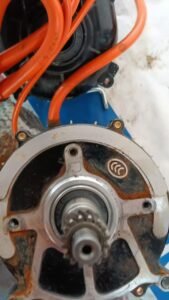
Alt Text: electric cargo tricycle fault inspection and repair steps