
5 Core Advantages of Electric Sewage Suction Tricycle
-
Compact Body for Hard-to-Reach Narrow Spaces
The electric sewage suction tricycle adopts a mini three-wheel layout with ultra-narrow body and small turning radius. It smoothly navigates rural village lanes, old residential building alleys, school campus back roads and farm enclosures where full-size sewage vacuum trucks cannot enter, covering all blind spots of sanitation cleaning.
-
Zero Emission & Low Noise for Residential Zones
Full-electric power design generates no tailpipe pollutants, complying with urban low-emission sanitation regulations. The silent vacuum pump runs at low decibel levels, allowing safe operation in residential areas without noise complaints day and night, a critical upgrade over noisy diesel sewage suction vehicles.
-
Powerful Integrated Vacuum Suction System
Equipped with a dedicated high-pressure vacuum pump and anti-corrosion sealed sewage tank, this tricycle achieves stable suction depth up to 4 meters. It quickly extracts thick sludge, septic waste and kitchen sewage without blockage, with reliable liquid level monitoring to avoid tank overflow during continuous work.
-
Low Long-Term Operating Cost for Sanitation Fleets
Electric charging cost is only 1/10 of diesel fuel expense. Without complex engine and exhaust components, the vehicle only needs regular vacuum pump filter and tank seal inspections, cutting annual maintenance fees by more than 60% for sanitation operators.
-
Multi-Scenario Sanitation Compatibility
The electric sewage suction tricycle adapts to multiple cleaning scenarios: rural household septic tank clearing, community sewage well maintenance, livestock farm manure transfer, factory small wastewater collection and campus environmental sanitation cleaning. The tank volume can be customized from 1.2m³ to 3m³ to match different workload scales.
https://yihuev.com/product/product-electric-sewage-suction-tricycle/
For general heavy sanitation material transport, view our rugged electric cargo tricycle.
❓ 10 Industry-Focused FAQs
- What sewage volume can an electric sewage suction tricycle hold?
Standard models carry 1.2–3 cubic meters of sewage sludge; customized large tanks support up to 3.5 cubic meters.
- How deep can the vacuum pump suck sewage sludge?
The professional vacuum system provides stable suction depth up to 4 meters for underground septic tanks and sewage wells.
- Is it allowed to operate in downtown residential communities?
Yes, zero emission and low noise meet urban sanitation operation rules without entry or noise fines.
- Can it handle thick livestock farm manure sludge?
The high-pressure anti-block vacuum pump works with thick fecal sludge, and the large-diameter suction pipe avoids clogging.
- What is the single full-charge driving mileage?
72V lithium battery versions run 70–100km, enough for full-day cross-village sanitation cleaning tasks.
- Can the sewage tank resist corrosion from chemical wastewater?
The tank adopts anti-corrosion steel coating and sealed rubber gaskets to resist weak acid and sewage corrosion.
- What regular maintenance does the suction system require?
Clean the pump filter monthly and inspect tank sealing gaskets quarterly; no complicated engine maintenance is needed.
- Is the vehicle stable on sloped rural roads when full of sewage?
Low center of gravity and widened rear wheels prevent tipping even when the tank is fully loaded with liquid sewage.
- Can it replace large diesel sewage trucks for village sanitation?
Perfect for scattered rural households and narrow-area cleaning; large trucks are only needed for centralized industrial sewage.
- Can sanitation fleets customize tank size and suction pipe length?
Yes, tank capacity, suction hose length and cab structure all support personalized wholesale customization.
🖼️ Image Alt Text
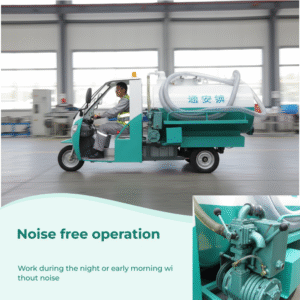
- Main Image: electric sewage suction tricycle septic tank sewage cleaning rural community sanitation work
- Sub Image: compact electric vacuum sewage suction tricycle for village environmental maintenance