Electric Waste Collection Cargo Tricycle: Urban Waste Handling Practical Workhorse
Why Electric Waste Collection Cargo Tricycles Are Transforming Urban Sanitation
Modern city sanitation teams face persistent challenges in narrow alleyways, dense residential blocks and compact community zones. Large garbage trucks often cannot access these tight spaces, leaving piles of domestic waste waiting for manual handling. The electric waste collection cargo tricycle solves this real‑world pain point, bringing flexible, low‑noise and emission‑free waste collection capacity right into hard‑to‑reach urban corners. Compared with traditional fuel‑powered three‑wheel vehicles, this sanitation‑specialized trike cuts daily operating costs while lowering environmental footprint for municipal and private sanitation contractors. For businesses looking for multi‑purpose transport solutions,
rugged electric cargo tricycle offers extra references for heavy‑duty fleet configuration.
Compact Body Design Brings Unmatched Site Accessibility
One standout strength of the electric waste collection cargo tricycle lies in its space‑saving chassis layout. Its narrowed overall width allows smooth travel along narrow community lanes, old town alleys and pedestrian‑mixed streets where standard sanitation trucks get stuck. Operators can drive close to waste bins, skip long‑distance manual carrying and greatly shorten single‑point waste‑collecting cycles. The vehicle body can be fitted with detachable waste bins or sealed dumping containers, adapting to mixed household garbage, recyclable materials and garden litter collection tasks. This flexible layout makes it a preferred option for property management companies and local government sanitation departments.
Zero‑Emission Operation Fits Green City Development Goals
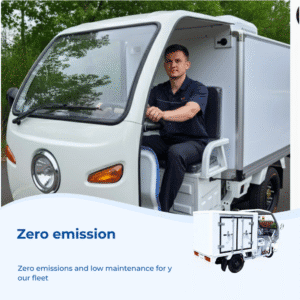
Against the global push for carbon reduction, emission‑free operation becomes a key purchasing factor for sanitation fleets. The electric waste collection cargo tricycle runs entirely on battery power, producing no exhaust fumes during daily collection rounds. Its low‑noise motor also avoids disturbing residents during early‑morning or late‑night waste‑collecting shifts. Many cities now set strict environmental standards for public service vehicles, and battery‑driven sanitation trikes easily meet these regulatory requirements. If you need vehicles for special‑scene material transportation,
light‑duty electric cargo tricycle provides more alternative fleet choices.
Strong Load‑Bearing Capacity For Daily Continuous Collection Work
Do not mistake its compact size for weak loading performance. Most qualified electric waste collection cargo tricycle models adopt reinforced frames and heavy‑duty rear suspension systems. They can hold large‑volume waste containers while keeping stable driving performance on uneven urban roads. Optimized battery capacity supports long shift hours, completing multiple rounds of waste collection without frequent recharging. Modular container structures support quick unloading, reducing waiting time at waste transfer stations and improving overall team work efficiency.
Low Maintenance Burden Reduces Long‑Term Fleet Expense
Sanitation fleets run high‑frequency daily operations, so maintenance expenditure directly influences project profit margins. Without internal combustion engine components, the electric waste collection cargo tricycle removes oil‑changing, filter‑replacement and fuel‑system repair work. Daily checks only cover batteries, controllers, brakes and tire conditions. Less spare‑part consumption and shorter downtime help sanitation contractors control operational budgets over years of service. According to industry equipment data published on
Kompass, battery‑powered sanitation vehicles have gained growing market share across mid‑sized cities worldwide.
Wide‑Ranging Real‑World Application Scenarios
This sanitation‑oriented three‑wheeler fits multiple working environments beyond regular city street waste pickup. It works well for residential community property garbage collection, scenic spot litter cleaning, industrial park waste sorting, campus sanitation work and small‑town municipal waste projects. Custom modification options include sealed anti‑leak bins for wet garbage, spray disinfection attachments and classification partition containers, satisfying diversified local sanitation project requirements.
What To Evaluate Before Purchasing An Electric Waste Collection Cargo Tricycle
Buyers should assess several core indicators before placing bulk orders. First, confirm actual load capacity and container volume matching local waste output. Second, verify real‑world driving range to fit daily route distances. Third, check frame welding quality and waterproof grade of electrical parts for all‑weather outdoor work. Fourth, confirm after‑sales support and spare‑part supply from manufacturers, which guarantees stable long‑term fleet running.
FAQ
Q1: Can the electric waste collection cargo tricycle work in rainy weather?
A: Standard models adopt waterproof‑treated motors and controllers, supporting normal light‑rain operation. Heavy‑rain scenarios suggest avoiding long‑time outdoor soaking to protect battery assemblies.
Q2: How many waste bins can one unit carry at maximum?
A: It depends on container configuration. Most common specifications support 2‑4 standard household waste bins, and custom large‑capacity containers are available for special‑demand projects.
Q3: What is the typical real‑world driving range per full charge?
A: Under full‑load working conditions, mainstream configurations deliver 60‑90 km range, sufficient for one full‑day sanitation collection shift.
Q4: Is the container easy to detach and clean?
A: Yes, detachable bin structures enable quick disassembly for high‑pressure washing, preventing residue buildup and unpleasant odors.
Q5: Can I add disinfection spray devices on the tricycle?
A: Most manufacturers support custom‑mounted spray disinfection modules, commonly used for medical‑related waste or public‑area sanitation work.
Q6: What kind of ground conditions is this tricycle suitable for?
A: It performs steadily on asphalt roads, cement roads and slightly bumpy gravel roads. Avoid severely rugged mountain roads to extend vehicle service life.
Q7: Are there different battery options for selection?
A: Lead‑acid and lithium iron phosphate batteries are two mainstream choices. Lithium‑iron versions feature lighter weight, longer cycle life yet higher unit cost.
Q8: Does the vehicle support quick‑swap‑battery function?
A: Some customized versions support battery swap, helping fleets eliminate waiting time for charging during peak working hours.
Q9: What after‑sales support do bulk order buyers receive?
A: Qualified suppliers provide operation manuals, vulnerable spare‑part kits and remote technical guidance for overseas bulk purchasers.
Q10: Can this tricycle collect recyclable materials besides domestic garbage?