
When choosing a power source for your electric tricycle business, the comparison between lead acid vs LiFePO4 battery for electric tricycles is one of the most important choices you will make. As a dealer or fleet operator, you need a battery solution that balances upfront cost, long-term reliability, maintenance needs, and performance for daily logistics operations. This guide explores every key aspect of lead acid vs LiFePO4 battery for electric tricycles to help you select the optimal power solution for your wholesale business.
Core Performance Comparison: Lead Acid vs LiFePO4 Battery for Electric Tricycles
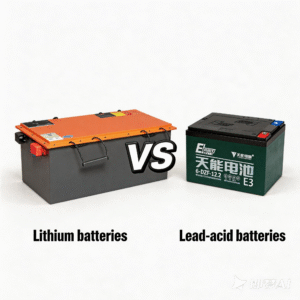
We have evaluated both battery technologies across all critical performance metrics relevant to electric tricycle use cases, including charging speed, range, service life, maintenance, cost efficiency, and safety features. The comparison table below provides a clear, data-driven overview to assist your decision-making process.
| Comparison Dimension | Lead-Acid Battery | Lithium Iron Phosphate (LiFePO₄) Battery |
|---|---|---|
| Charging Time | Low charge-discharge rate; standard charging requires 8–12 hours. Fast charging is not recommended as it may cause internal damage and reduce overall lifespan. | High-rate charge-discharge capability; standard charging takes 2–4 hours. Supports fast charging with a compatible unit, enabling up to 80% capacity in 1–2 hours. |
| Range Performance | Lower energy density results in shorter range per charge. For a 48V20Ah battery paired with an 800W motor, the range is typically around 40–50km. | Higher energy density delivers longer range. The same 48V20Ah LiFePO4 battery with an 800W motor achieves approximately 50–65km depending on load and road conditions. |
| Service Life | Cycle life: 300–500 cycles. Normal service life ranges from 2–3 years. Frequent heavy loads or deep discharge can reduce life expectancy to 1–2 years. | Cycle life: 2000–3000 cycles. Normal service life ranges from 5–8 years. Resistant to deep discharge and gradual degradation, maintaining performance even under heavy loads. |
| Maintenance Requirements | 1. Regularly check electrolyte levels and top up with distilled water when needed.
2. Avoid deep discharge and store with a partial charge if unused long-term. 3. Prevent overcharging and over-discharging to avoid plate damage. 4. Charge in a well-ventilated area away from direct heat or sunlight. |
1. Essentially maintenance-free; no routine checks or fluid refills required.
2. Avoid charging at extreme temperatures below -20°C or above 60°C. 3. Store at 50–70% charge for long-term storage. 4. Use a dedicated LiFePO4 charger; do not interchange with lead-acid chargers. |
| Cost Efficiency | Lower initial investment. Higher long-term cost due to frequent replacement cycles and increased maintenance needs. | Higher initial investment. Lower total cost of ownership over time due to extended service life and minimal maintenance. |
| Additional Features | 1. Heavier weight increases vehicle load and energy consumption.
2. Moderate safety performance with higher risk of thermal issues under abuse. 3. Significant performance loss in low-temperature environments. |
1. Lightweight design reduces overall vehicle weight and power consumption.
2. Excellent thermal stability and low risk of fire or explosion. 3. Superior cold-temperature performance compared to lead-acid alternatives. |
Why Understanding Lead Acid vs LiFePO4 Battery for Electric Tricycles Matters
For European and American wholesale dealers, selecting the right battery is critical to customer satisfaction and long-term business success. End users expect reliable performance, low maintenance, and safe operation. Lead-acid batteries remain popular for budget-conscious applications, while LiFePO4 batteries are increasingly favored for fleets prioritizing durability and reduced lifetime costs.
This comparison helps you evaluate tradeoffs and align your product offering with market demands. Whether you serve small-scale distributors, logistics companies, or agricultural buyers, clarity on lead acid vs LiFePO4 battery for electric tricycles enables you to provide informed recommendations and build trust with your customers.
How to Choose the Right Battery for Your Business
- If your customers prioritize low upfront cost: Lead-acid batteries remain a viable entry-level option.
- If your customers prioritize long-term reliability and low maintenance: LiFePO4 batteries offer superior value over the product lifecycle.
- For cold climate markets: LiFePO4’s performance in low temperatures makes it the more dependable choice.
Explore our full range of electric tricycle models with tailored battery configurations at https://yihuev.com/electric-cargo-tricycle-ect/ and contact our sales team to discuss bulk orders and custom solutions. For additional industry standards and safety guidelines, refer to the official documentation from the International Electrotechnical Commission (IEC) at https://www.iec.ch.